


Building a Community with Cooperative Credit Societies
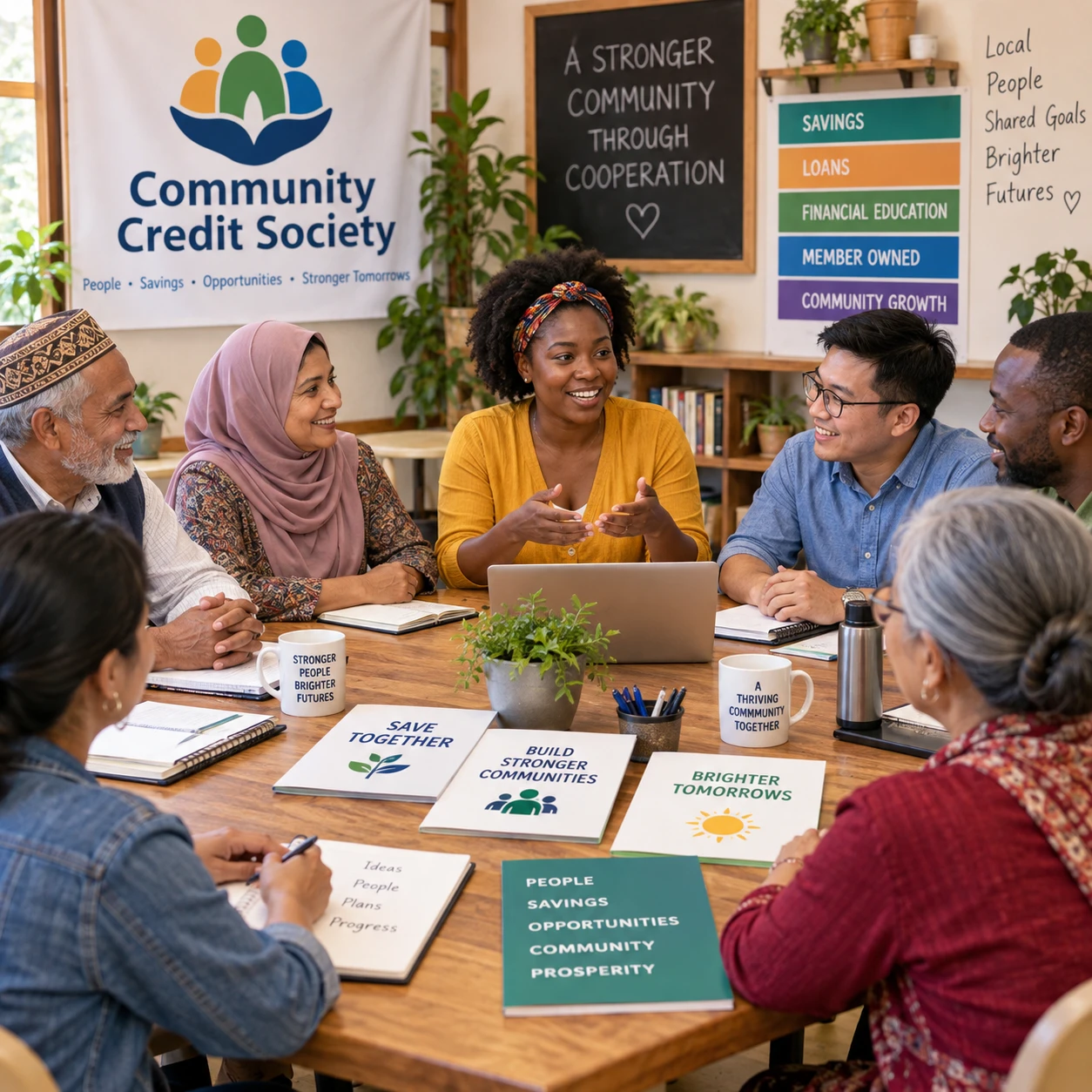
A cooperative credit society can help a community build financial options around shared needs, local knowledge, and mutual support. Its members own and govern the organization, making participation and accountability central to how it works.
That structure can support saving, responsible financing, and local development. But community ownership alone does not ensure good outcomes or Shariah compliance. Trust depends on clear rules, sound financial management, inclusive decision-making, and services that fit members’ needs.
What Is a Cooperative Credit Society?
A cooperative credit society is a member-owned organization that provides financial services primarily for its members. Its purpose is to help members save and access financing through a shared institution, rather than to maximize returns for outside shareholders.
Members usually contribute capital or savings and agree to the society’s rules. Depending on the society’s legal form and local regulations, they may be eligible to use its services and vote on important matters. The society may provide savings accounts or other savings products, financing, and financial education, subject to its capacity and governing rules.
The cooperative model links individual choices to collective outcomes. Members’ savings can support financing for other members, while repayments and prudent management help keep the pool functioning. That creates a practical form of mutual support, but it also means the society must manage liquidity, defaults, operating costs, and member expectations carefully.
A credit society is not automatically a bank, charity, or informal lending circle. Its permitted activities, deposit protections, and legal obligations vary by jurisdiction. Before joining, people should understand what the society is authorized to do, how funds are handled, and what risks members bear.
How Member Ownership Builds Trust and Participation
Member ownership builds trust when members have meaningful ways to influence decisions and hold the society accountable. A cooperative’s credibility comes from how it uses those rights, not simply from calling itself member-owned.
In many cooperatives, members elect a board or other representatives, review reports, and vote on major governance questions. The society’s bylaws should explain who can join, how voting works, how leaders are selected, and how members can raise concerns. Clear procedures make participation more than a once-a-year meeting.
Good governance also requires access to understandable information. Members should be able to see the society’s financial position, financing terms, fees, late-payment policies, and processes for handling complaints. Independent review or audit arrangements, where required or appropriate, can help verify that records reflect actual activity.
- Make decisions accessible: Offer meeting notices and key documents in languages and formats members can understand.
- Show how money moves: Explain how savings are used, how financing is approved, and how the society manages reserves.
- Invite scrutiny: Provide a clear route for questions, complaints, and appeals without retaliation.
Participation has limits. Members may have different financial priorities, and volunteer leaders may not have specialist skills. Training, transparent delegation, and professional financial oversight can help a society balance democratic control with competent day-to-day management.
Supporting Financial Inclusion Through Local Services
Cooperative credit societies can support financial inclusion by offering savings and financing designed around members’ circumstances. Local knowledge may help a society understand needs that larger institutions overlook, though it does not remove the need to assess affordability and risk.
For households, regular savings arrangements can make it easier to set aside money for school costs, repairs, or emergencies. Financing may help cover a productive asset or a necessary expense, depending on the society’s products and policies. Clear eligibility rules and plain-language disclosures matter: members should know the total cost, payment schedule, and consequences of falling behind before they agree.
Small enterprises may also benefit when a society understands seasonal income or local trading patterns. A financing schedule suited to a member’s cash flow can be more practical than one based on a uniform monthly payment. Still, flexible terms must be supported by careful underwriting and realistic repayment plans. Lending too freely can weaken the society and put members’ savings at risk.
To design useful services, a society can ask members what they need, map when income and expenses occur, and review who remains excluded. It might identify barriers such as minimum balances, documentation requirements, inaccessible meeting times, or limited financial literacy support. Adjusting one barrier at a time gives the society a way to test whether access improves without committing funds it cannot safely manage.
Aligning Cooperative Finance with Islamic Principles
A cooperative credit society can align its activities with Islamic finance principles when its contracts, operations, and governance meet the relevant Shariah requirements. Cooperative ownership by itself does not make a financial product Shariah-compliant, and interpretations or implementation standards may vary.
Islamic finance commonly emphasizes fairness, transparency, and avoiding riba (interest), alongside rules concerning excessive uncertainty and prohibited activities. Societies exploring Shariah-conscious services should examine the substance of each transaction, not just its label. Members need to understand what the society is buying, selling, leasing, or sharing, and which party carries which risks.
Possible structures include murabaha, a cost-plus sale; ijara, a lease; and mudaraba or musharaka, arrangements involving investment or partnership. These models have different contractual requirements and risk allocations. Profit-and-loss sharing may be appropriate in some circumstances, but it is not a universal solution for every financing need, nor does it mean losses can be assigned without regard to the agreed contract and applicable rules.
Before offering a product, a society can document its contract flow, pricing, disclosures, treatment of late payment, and any charitable or reserve arrangements. It should seek qualified Shariah advice and legal review appropriate to its jurisdiction. Choosing a structure for its religious and ethical aims also means accepting the administrative work needed to apply it consistently and explain it clearly to members.
Ways Societies Can Contribute to Community Development
Cooperative credit societies contribute to community development when they direct services toward durable local needs and manage shared funds responsibly. Their potential impact extends beyond individual financing, but community benefit should be measured rather than assumed.
At the household level, accessible savings and suitable financing can help members manage planned expenses and financial shocks. For small businesses, financing may support inventory, tools, or working capital. Where the society’s capacity allows, financial education can help members compare options, plan repayments, and understand risk before taking on obligations.
A society can also strengthen local resilience by listening to members and working with community organizations. For example, it might identify a shortage of affordable financing for essential equipment among local traders, then assess whether a carefully limited product could meet that need. The society would need to test demand, set eligibility and exposure limits, and review repayment performance before expanding.
- Start with evidence: Use member surveys, service data, and community discussions to identify real gaps.
- Set measurable aims: Track access, repayment performance, member retention, and participation, not just the amount disbursed.
- Protect the shared pool: Build reserves and avoid concentrating financing in one sector, group, or borrower.
Local focus can also create trade-offs. A society may understand its members well but have limited capital, staff, or geographic reach. Partnerships can extend expertise, yet they require clear agreements about responsibility, data, and member protection.
Challenges, Governance, and Responsible Growth
Responsible growth depends on clear rules, capable oversight, careful risk management, and ongoing member education. Without these safeguards, a society can lose trust through weak controls, poor communication, or financial losses.
Before expanding, leaders should define who may join, how savings are protected, how financing decisions are made, and how conflicts of interest are handled. The society should maintain accurate records, monitor cash flow and overdue financing, and follow applicable reporting and audit requirements. Members should receive timely updates when the society faces a material problem.
Common mistakes are avoidable:
- Promising guaranteed returns or safety: People may mistake cooperative ownership for a government guarantee. Explain the actual protections and risks in writing, and never promise outcomes the society cannot control.
- Expanding before controls are ready: Growth can increase administrative errors and credit losses. Test new services on a limited scale, set exposure limits, and review results before widening access.
- Using Islamic finance labels without checking contracts: A product name cannot establish Shariah compliance. Obtain qualified review, document the transaction steps, and disclose costs and responsibilities plainly.
Member education should cover both rights and responsibilities: how to vote, how to read financing terms, what happens when payments are missed, and how to raise a concern. A society may also need professional support in accounting, compliance, cybersecurity, or Shariah review. Expertise costs money, but inadequate oversight can cost far more in lost funds and confidence.
Frequently Asked Questions
These answers summarize common questions about cooperative credit societies, but membership rights, legal protections, and product rules depend on the society and the jurisdiction.
How does a cooperative credit society differ from a conventional lender?
A cooperative credit society is owned by its members, who may have voting rights and participate in governance. A conventional lender is generally owned by shareholders or another institution. Both must manage financial risk, and neither structure alone guarantees affordable terms or good service.
How can a society operate in line with Islamic finance principles?
It can select contracts that meet relevant Shariah requirements, disclose terms fairly, and obtain qualified review of its products and operations. Compliance depends on actual practice and may vary by interpretation, so a society should not claim universal approval without a sound basis.
Who can join, and how do members participate?
Eligibility is set by the society’s bylaws and applicable rules. Members may contribute capital or savings, use services, attend meetings, vote, elect representatives, and review reports. Prospective members should check whether voting rights and financial responsibilities differ by membership category.
What safeguards help protect members’ funds?
Safeguards include sound lending limits, reliable accounting, transparent reporting, independent oversight where appropriate, secure handling of records, and clear procedures for complaints and conflicts of interest. Members should also ask whether any formal deposit protection applies; it should never be assumed.
A well-run cooperative credit society makes finance a shared responsibility. Member ownership can create a strong basis for inclusion and community development, while transparent governance and careful Shariah-conscious design help turn that promise into a trustworthy service.